
Why the Temple of the Tooth Belongs on Every Sri Lanka Itinerary
If Italy has the Vatican, Sri Lanka has Kandy’s Sri Dalada Maligawa, better known as the Temple of the Tooth. For millions of Buddhists, it is the holiest address on the island, because it shelters what tradition says is a tooth of the Buddha. For travellers, it is something more: a living place of worship where drums, flowers, incense and white-clad pilgrims create an atmosphere that no museum can reproduce.
If you are travelling from Italy, this temple is likely to be the emotional centre of your cultural journey. Italians are used to monumental sacred architecture, from Roman basilicas to Sicilian cathedrals, and many visitors say that Kandy’s temple feels familiar in its devotion yet completely new in its rituals.
A Short History of the Sacred Tooth Relic
According to Sri Lankan chronicles, after the Buddha’s cremation in India, a tooth was rescued from the funeral pyre and kept in the kingdom of Kalinga. Around the 4th century CE, when the kingdom was under threat, Princess Hemamala and her husband Prince Dantha are said to have smuggled it to Sri Lanka, hidden in her hair.
From that moment, the relic became a symbol of royal legitimacy. Whoever protected the tooth was seen as the rightful ruler of the island. For this reason, the relic travelled with the royal capital, from Anuradhapura to Polonnaruwa and onward through several kingdoms, until it finally came to rest in Kandy, the last royal capital of the Sinhalese kings.
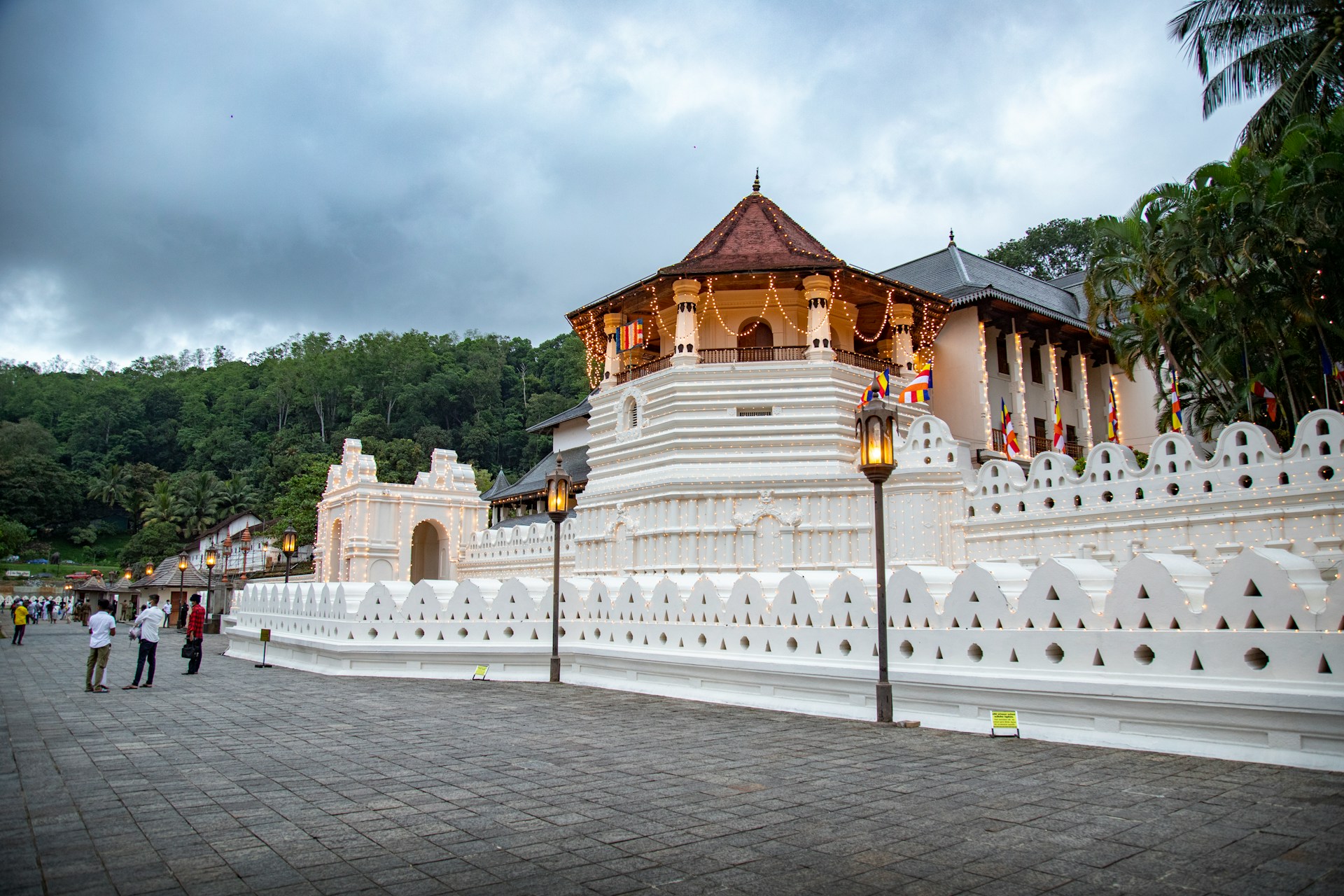
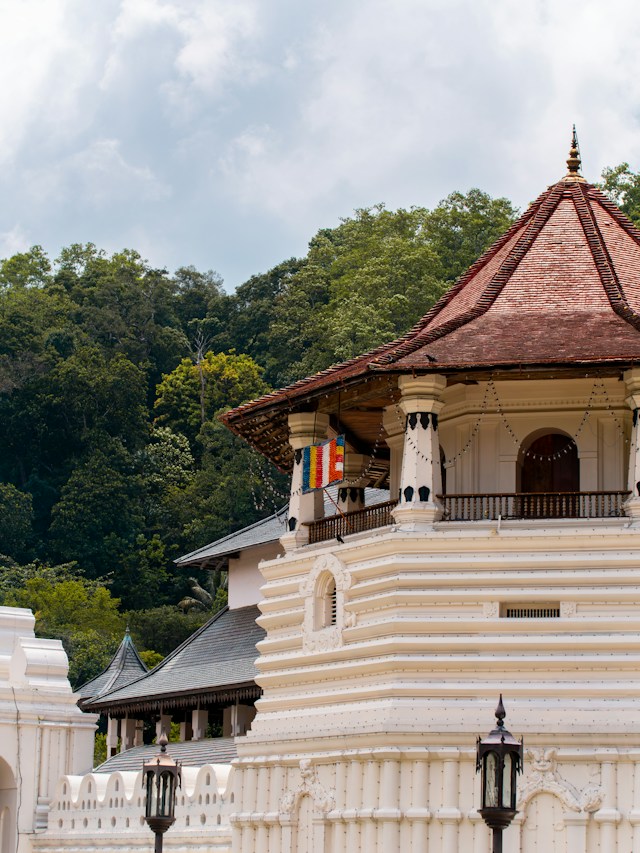
The present temple complex grew up beside the old royal palace. Later kings added defensive walls, a moat and the distinctive octagonal pavilion that today is one of the most photographed features of the site. In 1988, the Sacred City of Kandy was inscribed as a UNESCO World Heritage Site, with the Temple of the Tooth as its heart.
The temple also carries a more recent chapter. In 1998 a bomb attack damaged the front of the complex. It was carefully restored, and today it stands as a symbol of resilience and peace. Visitors are welcomed with calm and respect.
What You Will See Inside the Temple Complex
The moat and outer walls. Before you even enter, notice the white wall with its wave-like cut-out pattern, and the shallow moat that once protected the palace.
The octagonal pavilion. Originally used by the king to address his subjects, it now houses a small library with ancient palm-leaf manuscripts.
The inner shrine. On the upper floor stands the chamber where the relic is kept inside a series of nested golden caskets shaped like stupas. The casket itself is not usually shown openly, but you can see the ornate outer casket and watch devotees leave lotus flowers and jasmine as offerings.
Carved ivory, gilded roofs and painted ceilings. The decoration is a masterclass in Kandyan craftsmanship, with woodcarving, brass work and intricate gold detail.
Museums within the compound. Exhibits explain the story of the relic, the history of Buddhism in Sri Lanka and the royal period. Allow time for these, as they give useful context that most visitors miss.
Daily Rituals: The Best Moments to Visit
The temple is not only a monument; it is an active place of prayer, and the experience is far richer if you time your arrival with the ritual offerings (puja).
- Early morning puja takes place around dawn, with the sound of traditional drums and the oboe-like horanawa.
- Mid-morning puja usually happens around 9:30, followed by the offering of food.
- Evening puja is held around 6:30 in the evening and is the most atmospheric, with a crowded, devout and colourful scene.
On Wednesdays, a special herbal water ritual called Nanumura Mangallaya is performed, when the shrine is ritually cleansed. Ritual times can shift on poya (full moon) days and during festivals, so we recommend confirming with your guide on the day.
Tip for photographers: the best light for the exterior is early morning, while the interior is darkest and most beautiful at evening puja. Always ask your guide before photographing worshippers.
Esala Perahera: Sri Lanka’s Grand Festival
If your dates are flexible, plan your holiday around the Esala Perahera, held each year in July or August, linked to the full moon of the Esala month. For about ten days, the streets of Kandy fill with torch bearers, whip crackers, fire dancers, traditional Kandyan dancers and dozens of richly decorated elephants. The final night is the most spectacular.
Because it is one of Asia’s great cultural events, hotels and viewing seats in Kandy sell out months ahead. For Italian groups, especially those travelling in August when Italian holidays peak, early booking with a travel agency is essential.
Practical Information for Visitors
Dress code
This is a sacred site, and the rules are strictly applied.
- Wear modest clothing that covers your shoulders and knees. White or light colours are preferred.
- Shoes and hats must be removed before entering. You can leave shoes at a designated counter.
- Avoid transparent clothing, sleeveless tops, short shorts and beachwear.
- Do not pose for selfies with your back to Buddha images, as this is considered disrespectful.
Tickets and opening hours
The temple generally opens early in the morning and closes in the evening. Foreign visitors pay an admission fee that is higher than the local rate, and prices are revised from time to time. We therefore recommend confirming the current fee and hours before your visit. Your local guide can handle this for you.
Security
Expect bag checks at the entrance. Travel light, and carry only a phone or camera, a bottle of water in your hand if allowed, and some small cash for flower offerings.
How long to stay
Plan around two hours: roughly one hour inside the shrine and museums, and one hour to walk around the complex and enjoy the surroundings.
Getting to Kandy from the Airport and Colombo
Kandy lies in the central hills, at roughly 500 metres above sea level, and the climate is cooler and fresher than on the coast.
- By private car with driver: the most comfortable option for Italian families and groups. From the international airport near Negombo, the drive typically takes around three to four hours depending on traffic.
- By train: the line from Colombo to Kandy is scenic, and a first or second class seat gives you a taste of local life. Book in advance in high season.
- As part of a round trip: Kandy usually fits perfectly between the Cultural Triangle (Sigiriya, Dambulla, Polonnaruwa) and the tea country of Nuwara Eliya and Ella.
Travelling from Italy: What You Need to Know
Flights. Direct flights from Italy to Sri Lanka are uncommon. Most Italian travellers connect through a Gulf or Turkish hub. Total journey time is usually between 11 and 16 hours depending on the layover.
Visa. Italian citizens normally need an electronic travel authorisation before arrival. Apply online through the official government system before you fly, and keep a printed copy with your passport. Rules change, so check the latest requirements when you book.
Time difference. Sri Lanka is three and a half hours ahead of Italy during summer time and four and a half hours ahead in winter. Plan your first day gently to adjust.
Best season. For Kandy and the hill country, the drier months from December to March are very pleasant. The Esala Perahera in July or August is the cultural highlight, though it is busier and more expensive.
Health and comfort. Bring a light scarf or shawl for temple visits, sunscreen, an umbrella or light rain jacket, and comfortable shoes that are easy to slip off.
Food. Italian travellers often miss pasta and espresso, but Kandy has good options. Do not miss a rice and curry lunch, fresh string hoppers, jaggery sweets and a cup of Ceylon tea grown in the surrounding hills.
Nearby Attractions to Combine with Your Visit
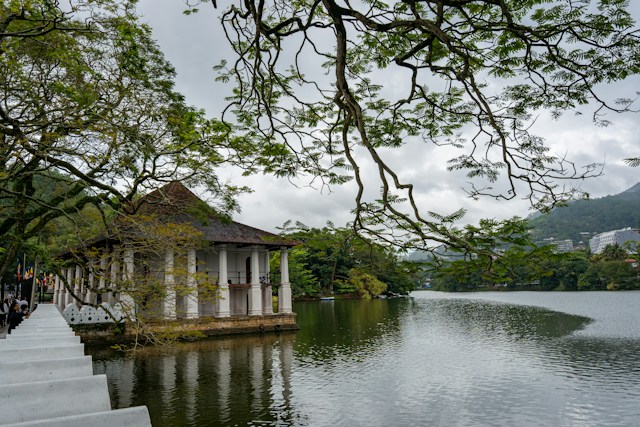
- Kandy Lake, right beside the temple, perfect for a relaxed evening walk.
- Royal Botanical Gardens of Peradeniya, a vast and elegant garden with orchid houses and giant trees.
- Bahirawakanda Vihara Buddha Statue, a hilltop statue with a panoramic view over the city.
- Kandyan cultural dance show, a one-hour performance of drumming, costumes and fire walking.
- Spice and tea plantations, easy half-day visits that show how Sri Lanka’s famous exports are produced.
Etiquette and Respect: Small Things That Matter
- Speak softly and move slowly inside the shrine.
- Never touch monks, and women should not hand objects directly to them.
- Do not point your feet toward statues or altars.
- Offer flowers only if you wish; it is a symbolic gesture, not an obligation.
- Follow your guide’s lead, and do not block the queue of devotees.
Why Book Your Kandy Experience with a Local Travel Agency
Visiting the Temple of the Tooth independently is possible, but a licensed local guide transforms the visit. A knowledgeable guide explains the symbolism, helps you time the rituals, avoids the thickest crowds and manages the practical details, from tickets to transport.
A tailor-made itinerary also allows Italian travellers to combine Kandy with beaches, wildlife safaris, ancient cities and hill-country train rides, with Italian or English speaking support, comfortable hotels and flexible pacing.
Frequently Asked Questions
Is the Temple of the Tooth worth visiting? Yes. It is one of the most important spiritual and cultural sites in South Asia and offers a genuine insight into Sri Lankan Buddhism.
Can I see the actual tooth? The relic is kept in a sealed golden casket and is displayed to the public only on rare occasions. Visitors normally see the ornate outer casket in the inner shrine.
Is photography allowed? Exterior photography is welcome. Inside, rules can apply, so check signs and ask staff. Flash is discouraged.
Is the temple suitable for children and older travellers? Yes, though there are stairs and crowds at ritual times. Visiting outside peak puja hours is more comfortable for families and seniors.
How much time do I need in Kandy? One full day is the minimum; two nights lets you enjoy the temple, the lake, the botanical gardens and a cultural show without rushing.
What should women and men wear? Both should cover shoulders and knees. Light cotton trousers or a long skirt and a modest top are ideal.
Final Thoughts
The Temple of the Tooth is not just another sightseeing stop. It is the spiritual heart of Sri Lanka, where history, faith and everyday devotion meet in one golden shrine beside a quiet lake. For Italian travellers who love culture, sacred art and authentic encounters, Kandy offers an unforgettable chapter in any Sri Lanka holiday.
Contact our team to build your personalised itinerary, with expert guides, comfortable transport and the right timing for the evening ritual or the great Perahera festival.